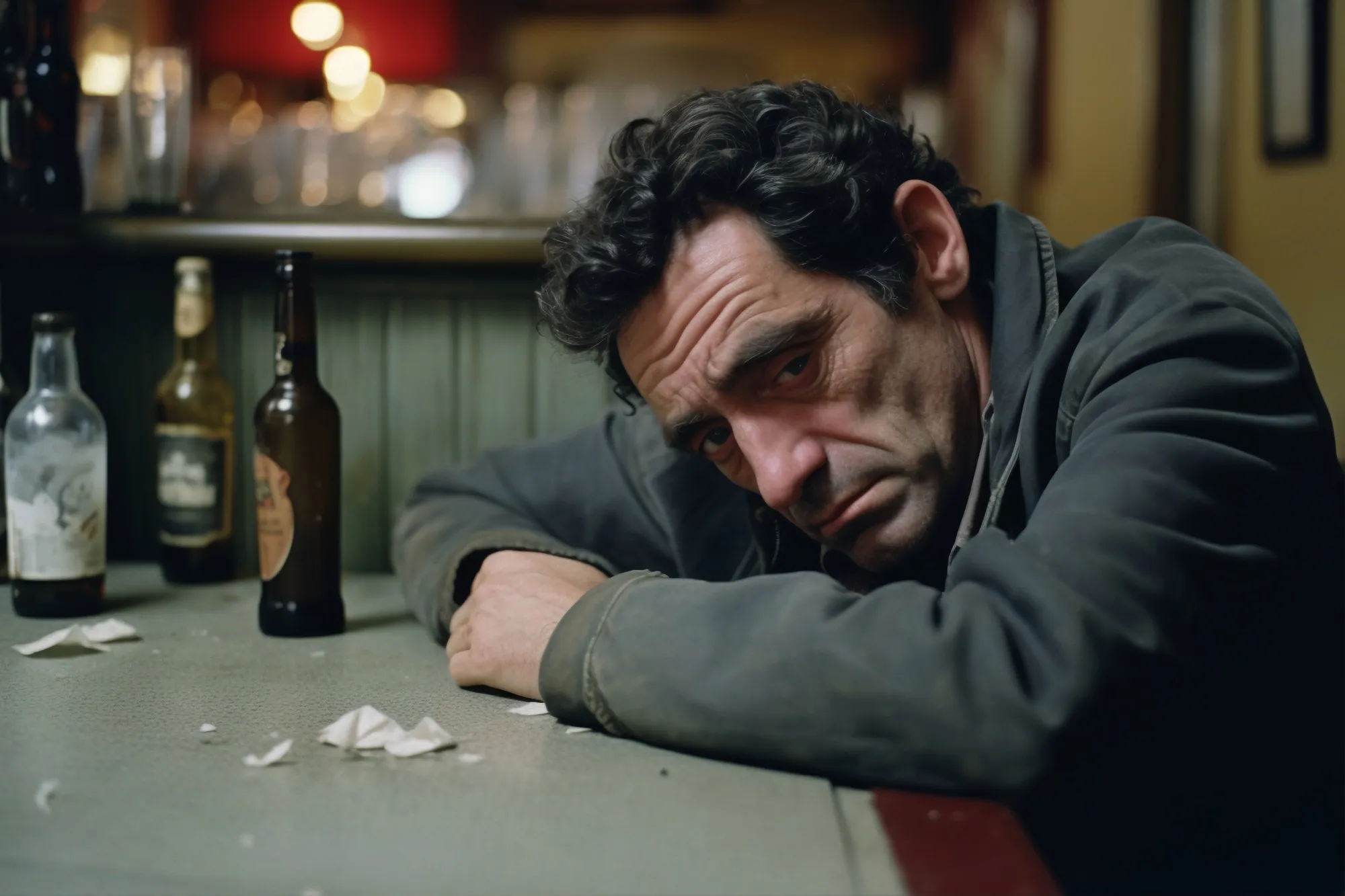
Sobriety without illusions
Sobriety without illusions: body, emotions and living “here and now”
Quitting alcohol is not one decision. It is hundreds of small decisions, every day. In the first weeks almost everything changes: sleep, appetite, mood, and how you relate to other people and to yourself. Much of it is frightening if you don’t know it is a normal part of recovery.
This article covers four topics people ask about most at the start of sobriety. What happens to the body in the first 30 days. How to tell ordinary sadness from depression. Why your mood swings and what to do about it right now. And why it’s not worth waiting for “the right moment” to start living.
Important: when stopping alcohol is dangerous
Medical disclaimer. This article is for information only and does not replace advice from a doctor. If you have been drinking daily, or heavily for several weeks in a row, stopping suddenly can be life-threatening. Before you stop, talk to your family doctor or call the family doctor advice line 1220.
Alcohol withdrawal usually begins 6–24 hours after the last drink and is strongest on days 2–3. For some people it is severe. The risk is higher if you have had seizures or delirium tremens before, if you have been drinking heavily for a long time, or if you have heart or liver disease or epilepsy.
Call 112 immediately if you or someone near you has:
- seizures or loss of consciousness;
- confusion – not knowing where they are or what day it is;
- hallucinations – seeing, hearing or feeling things that aren’t there;
- severe whole-body shaking, fever, heavy sweating, a very fast pulse;
- chest pain, difficulty breathing, repeated vomiting;
- thoughts of suicide or self-harm.
Delirium tremens (DTs) most often develops 2–4 days after the last drink. It is a medical emergency: without hospital treatment it can be fatal. Do not try to “sit it out” at home, and never “treat” it with alcohol or someone else’s pills.
1. The first 30 days of sobriety: what happens to your body and mind
The first month without alcohol is the hardest stretch, and also the one with the fastest changes. Alcohol suppressed your nervous system for a long time, and the brain adapted by “turning up” its own excitation to stay in balance. When alcohol is gone, that excitation is left without a counterweight. That is where the anxiety, insomnia, shakes and irritability come from.
Everyone’s path looks different. What follows is a typical picture, not a schedule your body has to keep to.
Days 1–3: the acute phase
In the first 24 hours people often get shaky hands, sweating, nausea, headaches, a racing heart and strong anxiety. Sleep is shallow and broken, with vivid dreams. These are also the days when seizures and delirium can occur, so medical supervision matters most here.
Psychologically, this is a time of strong cravings and thoughts like “just one drink and it will all go away”. That thought is not a sign of weakness. It is the voice of a brain that spent a long time learning that relief comes from a bottle.
What helps: water and small portions of simple food, a calm setting, and someone nearby who knows the danger signs. Only a doctor should prescribe withdrawal medication.
Days 4–7: the body starts to settle
For most people the acute physical symptoms ease noticeably by the end of the first week. Appetite returns and blood pressure steadies. Sleep and mood are often still unstable. Many feel empty and tired – the body has done a lot of work.
This is when a dangerous thought appears: “I feel better, so I’m in control now.” Physical relief does not mean the dependence is over.
Days 8–14: the strange middle
The second week often brings unexpected emotions. Feelings that were long “drowned” come to the surface: shame, guilt, resentment, fear of the future. You get back the ability to see your situation clearly – and that can hurt.
At the same time concentration improves, skin looks fresher and puffiness goes down. Digestion gradually returns to normal.
Days 15–30: a new foothold
By the end of the month many people notice that mornings feel different: a clearer head, more energy. If you have alcohol-related fatty liver, it begins to recover during these weeks. In people with high blood pressure, it often comes down.
Cravings don’t vanish in a month, though. They come in waves – at the hours, days and places where you used to drink. Friday evening, payday, an argument, a celebration. Knowing your triggers is half your protection.
Post-acute withdrawal: why “good” takes time
For some people poor sleep, anxiety, irritability and memory or concentration problems last for weeks or months after the acute phase. This is often called post-acute withdrawal syndrome (PAWS). The symptoms come in waves and fade over time. Every sober day helps the brain recover.
A practical checklist for the first month
- Routine. Get up and go to bed at the same time, even if you sleep badly. A daily rhythm steadies the nervous system.
- Food and water. Regular meals reduce cravings: hunger is easily mistaken for the urge to drink. Ask your doctor about B vitamins, especially thiamine (B1).
- Movement. 20–30 minutes of walking a day improves sleep and mood. Save intense workouts for later, when your body is stronger.
- People. One person you can call in a hard moment matters more than ten tips from the internet.
- Environment. Get alcohol out of the house. Decide in advance what you’ll say when someone offers you a drink.
- Journal. Three lines every evening: how you slept, when the cravings came, what helped. After a week you’ll see your patterns.
2. How to tell ordinary sadness from depression during recovery
Feeling sad early in sobriety is normal. You are saying goodbye to a familiar way of coping, sometimes to a group of friends, and to a part of yourself. That sadness resembles grief, and it passes. Depression is different: it is an illness that needs treatment.
Telling them apart matters for two reasons. Untreated depression is one of the common causes of relapse. And people with alcohol dependence have a markedly higher risk of suicide, especially during hard periods.
Why alcohol and depression go hand in hand
Alcohol brings brief relief, but with regular use it lowers your mood and disrupts sleep on its own. It becomes a loop: I feel bad – I drink – I feel worse – I drink again.
The good news: for many people, alcohol-related depressive symptoms ease noticeably within 2–4 weeks of sobriety. If they last longer or get worse, the depression may be a condition in its own right. Then it needs its own treatment.
Sadness or depression: a comparison
| Sign | Ordinary sadness | Possible depression |
|---|---|---|
| Duration | Hours or a few days, in waves | Nearly every day, most of the day, for 2 weeks or more |
| Joy | Between waves something still feels good: food, a talk, a walk | Nothing brings pleasure, not even things you used to enjoy |
| Cause | Usually clear what you’re sad about | A heaviness “for no reason”, a grey film over everything |
| Self-image | Regret, but self-respect holds | Feeling worthless, intense guilt, “I’m a burden” |
| Body | Tired, but energy comes back | Exhaustion, big changes in sleep and appetite, slowed down |
| Future | Hope doesn’t disappear | Hopelessness, thoughts of death |
| Daily life | You cope, even if it’s hard | Hard to get up, eat, wash, talk to people |
The table helps you get your bearings but does not make a diagnosis. Only a doctor or psychiatrist can do that.
When to get help
Book an appointment with your family doctor or a psychiatrist in the next few days if:
- low mood or loss of interest has lasted more than two weeks in a row;
- after a month of sobriety you feel no better, or worse;
- you are barely sleeping, or sleeping most of the day;
- anxiety or panic attacks are getting in the way of life;
- you want to “numb” how you feel with alcohol, pills or other substances.
Call 112 right away if you have thoughts of suicide with a plan or intent, or you feel you can’t keep yourself safe. If you urgently need to talk, call one of the emotional support lines listed under “Where to get help in Estonia”.
What you can do yourself
Self-help does not replace treatment, but it complements it well.
- Behavioural activation. Don’t wait to feel like it – do one small thing a day. Mood often follows action, not the other way round.
- Mood scale. Every evening, rate your day from 0 to 10. Two weeks of scores below 4 is a reason to talk to a doctor.
- Light and movement. In Estonia, autumn and winter days are short. A daytime walk helps both sleep and mood.
- Not alone. Tell at least one person how you are really doing. Isolation deepens both depression and cravings.
Asking for help is not admitting defeat. It is as much a part of sobriety as giving up alcohol.
3. The emotional rollercoaster: why your mood swings after quitting alcohol and how to cope
Euphoria in the morning, irritation over some small thing at midday, tears in the evening. Almost everyone who has recently stopped drinking knows these swings. It isn’t your character or “weak willpower”. It is physiology, plus being unused to living with feelings without an “anaesthetic”.
Why it happens
- Brain chemistry is readjusting. Alcohol affected the brain’s calming and excitatory systems, and its reward system, for a long time. Restoring balance takes weeks to months.
- Sleep hasn’t settled yet. Lack of sleep on its own makes anyone irritable and vulnerable.
- Feelings are back at full volume. What used to be drowned is now felt directly. Handling emotions is a skill you train, like a muscle.
- Blood sugar and hunger. Irregular meals cause sharp dips in energy and mood.
The HALT rule: four questions before an outburst
Recovery communities have long used a simple check: am I too…
- Hungry?
- Angry?
- Lonely?
- Tired?
Cravings and irritation often ease with food, a call to a friend or sleep, rather than a fight with yourself.
Breathing exercises
Slow breathing with a longer out-breath activates the parasympathetic nervous system – the part responsible for calming down. It is one of the quickest ways you have to lower tension. Breathe gently, without effort. If you feel dizzy, go back to normal breathing.
- “4–6” breathing (2–5 minutes). Breathe in for a count of 4, out for a count of 6. That makes about 6 breaths a minute. Good for daily practice, morning and evening.
- Box breathing. In for 4, hold for 4, out for 4, hold for 4. Repeat 4–6 times. Helps you collect yourself before a difficult conversation.
- Double inhale, long exhale. Breathe in through the nose, take a short second sip of air on top, then breathe out slowly through the mouth. Two or three rounds work as quick “first aid” for acute anxiety.
Self-regulation techniques
- 5–4–3–2–1 grounding. Name 5 things you can see, 4 you can feel on your skin, 3 you can hear, 2 you can smell and 1 you can taste. Your attention comes back to the present moment.
- Urge surfing. A craving is like a wave: it builds, peaks and falls, usually within 15–30 minutes. Don’t argue with it – observe it. Where in your body do you feel it? How strong is it from 0 to 10? Rate it again in 5 minutes.
- The 20-minute delay. Don’t promise yourself “never”. Say: “For the next 20 minutes I’ll do something else.” A walk, a shower, a cup of tea, a phone call.
- Cold water. Splash your face with cold water or hold ice in your hand for 30 seconds. It quickly lowers arousal. If you have a heart condition, ask your doctor first.
- Name the feeling. “I’m angry right now”, “I feel ashamed”, “I’m scared”. Once an emotion is named, its intensity usually drops.
- A plan for hard evenings. Write down in advance three things that help you and the numbers of three people you can call. In a crisis you won’t have to think anything up.
The swings settle over time. But if they are strong enough to frighten you or the people close to you, tell your doctor.
4. Deferred life syndrome: how to stop waiting for “the right moment” to change
“I’ll quit after the holidays.” “I’ll start on Monday.” “Once I find a job, then…” Sound familiar? This is what psychologists call deferred life syndrome. It isn’t a medical diagnosis, but it is an accurate name for the habit of living life as a rough draft and postponing the real thing.
For people with an addiction, this mechanism is especially treacherous. Waiting for “the right moment” gives you permission to drink today. And the perfect moment never comes.
Why we wait
- Fear of failure. If you haven’t tried, you can’t lose. Waiting protects you from shame but costs you time.
- All-or-nothing thinking. It seems you have to change everything at once – work, family, health. A task that big is frightening, so nothing gets done.
- The brain picks the nearer reward. Relief from alcohol comes now, the benefits of sobriety come later. Addiction amplifies this natural weakness.
- Past relapses. “I’ve tried before and it didn’t work.” But every attempt teaches you something. Many people reach lasting sobriety only after several tries.
The value of one sober day
A well-known principle in recovery is simple: “Just for today.” You don’t have to promise yourself a lifetime of sobriety. It is enough to get through today.
One day seems tiny, but a new life is built out of days. Every sober day gives you:
- another night in which your brain and liver recover;
- money that stays in your pocket;
- a conversation with someone close that you won’t regret later;
- one more piece of proof for yourself: “I can do this.”
How to start living now: five steps
- Make the step smaller. Not “change my life”, but “call the doctor today” or “go for a walk today”. The step should be so small that it’s impossible not to take it.
- Replace “when…, then…”. Turn “When I get a job, then I’ll quit” into “I’m sober – and that makes it easier to look for work.”
- Count your days. A calendar or an app turns invisible work into a visible result.
- Plan something good. One enjoyable thing a week – a film, fishing, the sauna, meeting a friend. Sobriety isn’t only giving something up; it is also gaining.
- A relapse is not the end of the road. If it happens, don’t wait for another “Monday”. Tell someone you trust and go back to your plan the same day.
The best moment is today
Life has no rough draft. The time you are living now isn’t preparation for real life – it is life itself. Even if today isn’t perfect, a sober day makes it yours.
Every small step brings you closer to the life you deserve.
Where to get help in Estonia
If a life is in danger, call 112. The other contacts were checked on official websites in November 2026; opening hours can change.
| Where | Contact | When to use it |
|---|---|---|
| Ambulance, rescue, police | 112, 24/7 | Seizures, delirium, loss of consciousness, suicidal thoughts with intent |
| Family doctor advice line | 1220, from abroad +372 634 6630; 24/7 in Estonian and Russian, in English daily 9:00–17:00 | You’re unsure how dangerous your withdrawal symptoms are |
| Eluliin emotional support | 655 8088 (Estonian), 655 5688 (Russian); 19:00–7:00 | You’re struggling and need to talk |
| Emotional support and pastoral care line | 116 123 | Fear, anxiety, grief, loneliness |
| Victim Support crisis line (Ohvriabi) | 116 006, from abroad +372 614 7393; chat at palunabi.ee | Violence, crisis, urgent support |
| Alcohol use disorder treatment centres | List with phone numbers on alkoinfo.ee; treatment is free, including for people without health insurance | You need treatment for dependence |
| Family doctor | Your family health centre | First step: mild withdrawal, referral to a specialist |
| Peaasi.ee | E-counselling at noustamine.peaasi.ee | Anxiety, low mood, mental health questions |
| Alcoholics Anonymous Estonia | Meeting schedule online; free | Support from people with similar experience |
| Alkoinfo.ee | AUDIT test, Selge self-help programme (Estonian and Russian) | You want to assess your drinking or take a first step |
If you need a safe place to recover – housing, a daily routine, support and work – contact MTÜ UUSTEE.
Sources: Terviseportaal, Ohvriabi / palunabi.ee, Eluliin, Alkoinfo – where to turn, Peaasi.ee.